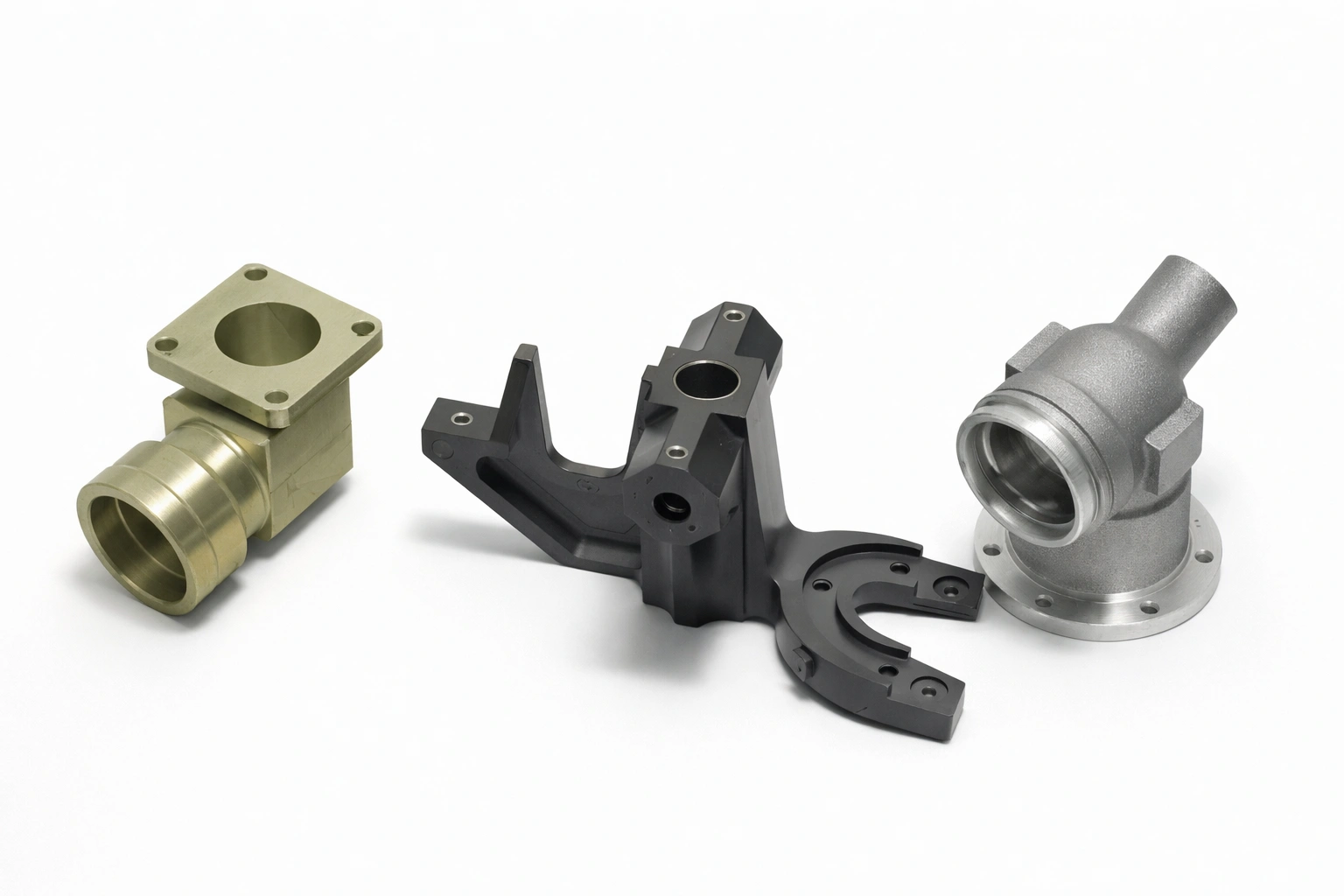

When industrial components face aggressive chemical exposure or severe mechanical wear, engineers rely on powder coating—a dry finishing process that utilizes electrostatic adhesion to apply free-flowing powder, which is then thermally cured to form a highly durable, cross-linked protective layer. Unlike traditional liquid paints that suffer from VOC emissions, dripping, and uneven coverage, this method ensures a uniform, chip-resistant finish even on complex geometries. Whether you need a resilient powder coat for automotive chassis, a weatherproof powder coated surface for architectural aluminum, or heavy-duty powdercoating for industrial machinery, this technology solves critical design bottlenecks related to corrosion, metal fatigue, and premature part failure.
【Key Takeaways】
Core Mechanism: Relies on electrostatic charge to bond dry powder to metal substrates, followed by a thermal baking process that triggers chemical cross-linking for maximum adhesion.
Engineering Advantages: Delivers superior resistance to corrosion, impact, chemicals, and UV degradation compared to conventional wet paint, drastically extending the lifespan of parts in harsh environments.
Eco-Friendly & Cost-Effective: Operates as a near-zero VOC process that allows for overspray recovery, making it a highly compliant and economical surface treatment solution for large-scale B2B manufacturing.
Surface Preparation and Chemical Pretreatment
Proper surface preparation directly dictates the final adhesion strength and corrosion resistance of the powder layer. Metal substrates require meticulous cleaning and chemical modification before powder application begins. Engineers typically utilize a multi-stage pretreatment system:
Mechanical Cleaning: Abrasive blasting removes existing mill scale, laser oxide edges, and rust from the metal component.
Chemical Degreasing: Alkaline wash solutions strip machining oils, grease, and shop dirt from the metal surface.
Conversion Coating: Zinc phosphate or zirconium treatments create a microscopic crystalline structure on the metal surface. This chemical structure enhances mechanical bonding between the metal and the polymer.
If manufacturers skip meticulous pretreatment, the applied powder materials will fail prematurely through delamination or under-film corrosion, regardless of powder quality. Manufacturers must prioritize comprehensive surface preparation techniques to ensure long-term coating durability.
Electrostatic Powder Application
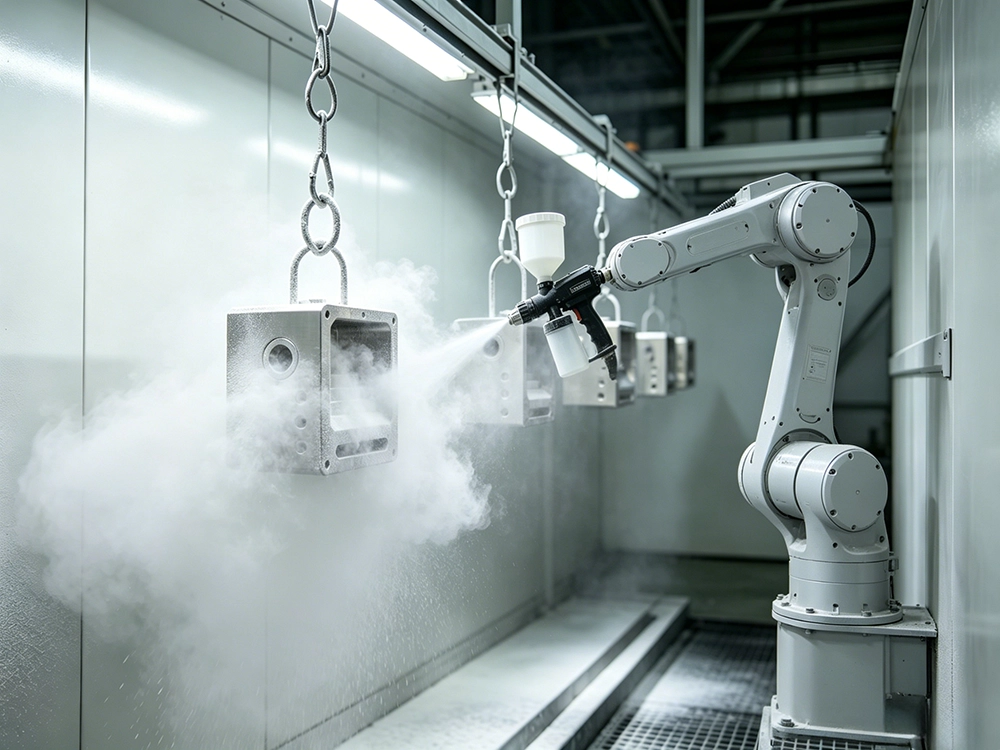
The application stage utilizes a corona discharge spray gun to apply a static electric charge to the dry powder particles. Operators spray the charged powder particles toward a grounded metal substrate. The grounded metal substrate strongly attracts the charged powder particles. This electrostatic attraction ensures high transfer efficiency during the coating process. The electrostatic field also pulls powder particles around complex geometric edges and into recessed areas. Consequently, electrostatic application minimizes material waste and achieves a highly uniform film thickness across the entire metal component.
Thermal Curing and Polymer Cross-Linking
Thermal curing transforms the loose powder layer into a continuous, highly durable polymer film through high-temperature baking. The metal part enters an industrial curing oven immediately after powder application.
Melting Phase: The oven heat melts the solid powder particles into a fluid state.
Flow Phase: The fluid resin flows evenly across the metal surface to create a smooth finish.
Cross-Linking Phase: The elevated temperatures (typically 160°C to 210°C) trigger an irreversible chemical reaction within the thermoset polymer.
The thermal curing phase establishes the robust mechanical properties, impact resistance, and chemical resistance characteristic of industrial powder finishes.
Superior Durability and Corrosion Resistance
Powder-coated metal components deliver exceptional resistance against mechanical impacts, chipping, scratching, and severe atmospheric corrosion. The thermal cross-linking process creates a dense, non-porous polymer barrier that effectively blocks moisture, salt spray, and aggressive industrial chemicals from reaching the underlying metal substrate.
Impact Resistance: Thermoset polymer networks absorb and disperse mechanical shock better than rigid liquid coatings.
Corrosion Protection: Cross-linked structures eliminate microscopic pinholes, significantly reducing rust initiation points on steel and aluminum surfaces.
When deployed in aggressive marine or chemical processing environments, robust corrosion prevention coatings drastically reduce the maintenance downtime and lifecycle replacement costs of structural metal assemblies.
Environmental Compliance and Reduced VOC Emissions
Environmental sustainability remains a primary driver for industrial manufacturers transitioning away from solvent-borne liquid paints. Powder coating formulations contain zero or near-zero volatile organic compounds (VOCs) and hazardous air pollutants (HAPs).
Solvent-Free Formulation: The dry coating material requires no organic thinners or petrochemical solvents.
Overspray Recovery Systems: Automated powder application booths capture fugitive powder particles via recycling cyclones and cartridge filters, achieving up to 95% material utilization efficiency.
This near-zero emission profile enables heavy manufacturing facilities to comply strictly with environmental regulations without investing in complex, expensive thermal oxidizer abatement systems.
Economic Efficiency and Production Throughput
The operational economics of industrial powder coating systems favor high-volume manufacturing throughput and lower overall per-part coating costs. Because oversprayed powder is fully reclaimable, material waste drops to a fraction of traditional liquid spray painting.
| Performance Metric | Powder Coating Technology | Traditional Liquid Paint |
|---|---|---|
| Material Utilization | Up to 95% (via overspray recycling) | 40% to 60% (due to heavy solvent runoff) |
| Curing Speed | Rapid thermal cure (10 to 20 minutes) | Extended air-dry or flash-off times |
| VOC Emissions | Near-zero (solvent-free dry powder) | High (requires solvent evaporation controls) |
Furthermore, the rapid thermal baking cycle eliminates lengthy drying delays, allowing coated components to be handled, packaged, and assembled immediately upon exiting the convection oven.
Epoxy Resins for Indoor Chemical Resistance
Epoxy-based powder coatings provide the highest level of chemical resistance and mechanical hardness among thermoset polymers, making these formulations ideal for harsh indoor industrial environments. Engineers specify pure epoxy powders for metal components completely shielded from direct sunlight, as epoxy molecular chains chalk and degrade under ultraviolet radiation.
Chemical Defense: Epoxy cross-linking creates an impenetrable barrier against harsh solvents, industrial lubricants, and corrosive alkalis.
Adhesion Strength: The resin structure ensures superior bonding to complex steel geometries, heavy cast iron parts, and porous metal substrates.
Therefore, epoxy coating systems remain the baseline specification for indoor oil pipeline valves, automated manufacturing machinery, and electrical enclosures where extreme chemical exposure heavily outweighs outdoor weathering concerns.
Polyester Resins for Outdoor UV Stability
Polyester powder formulations dominate outdoor structural applications because polyester polymer networks inherently resist ultraviolet radiation degradation and long-term environmental weathering. When architectural aluminum or exterior steel components require multi-year durability, manufacturers apply TGIC (Triglycidyl Isocyanurate) or Primid (TGIC-free) polyester powders to the metal substrate.
Weathering Resistance: Polyester finishes maintain structural integrity, gloss retention, and color stability during prolonged exposure to intense sunlight and temperature fluctuations.
Mechanical Flexibility: The polymer composition provides excellent edge coverage and mechanical flexibility, preventing micro-cracking on stamped metal panels or formed brackets.
By selecting high-grade polyester formulations, engineers guarantee durable aesthetic and structural performance for outdoor HVAC cabinets, agricultural equipment, and weather-resistant architectural metals.
Hybrid Powders for Balanced Functional Performance
Hybrid powder formulations blend epoxy resins with polyester resins to bridge the performance gap, balancing the superior chemical protection of epoxies with the improved aesthetic characteristics of polyesters. Chemical formulators create hybrid powders specifically to serve diverse indoor manufacturing requirements while optimizing material costs.
Overbake Resistance: The polyester component prevents coating yellowing if the metal part remains inside the curing oven longer than the standard cycle time.
Aesthetic Smoothness: Hybrid mixtures flow out more evenly during the thermal melting phase, creating an ultra-smooth finish ideal for visible consumer products.
Ultimately, hybrid powder systems offer B2B manufacturers a highly versatile, cost-effective protective layer for indoor telecommunications server racks, heavy office furniture, and consumer appliance housings that demand visual appeal alongside moderate mechanical protection.
Material selection requires engineers to match the coating chemistry directly against the specific environmental stressors and substrate metallurgy of the final industrial application. Specifying an incorrect powder formulation leads to rapid finish degradation, compromised aesthetics, and eventual substrate corrosion. Engineers must execute a systematic evaluation process:
Analyze Substrate Properties: Aluminum architectural profiles require specific chemical conversion coatings, whereas heavy carbon steel fabrications demand aggressive abrasive blasting and zinc-rich primers.
Determine UV Exposure: Outdoor architectural components mandate exterior-grade polyester resins to prevent chalking, while indoor machinery chassis function perfectly with hybrid epoxy formulations.
Assess Chemical Contact: Industrial components facing routine caustic washdowns or hydraulic fluid exposure need high-density pure epoxy coatings to prevent polymer breakdown.
Aligning the powder chemistry with specific environmental parameters ensures maximum coating lifespan and prevents costly field failures across large manufacturing runs.
Rigorous quality control testing guarantees the cured powder film meets exact engineering specifications and functional performance standards. Professional coating facilities implement strict inspection protocols to measure film thickness, cure uniformity, and mechanical adhesion.
| Quality Test Category | Standardized Reference Method | Purpose for Metal Substrates |
|---|---|---|
| Mechanical Adhesion | ASTM D3359 (Cross-Hatch Tape Test) | Verifies the structural bond strength between the polymer film and the treated metal. |
| Impact Resistance | ASTM D2794 (Falling Weight Deformation) | Evaluates polymer flexibility and fracture resistance under sudden kinetic force. |
| Corrosion Performance | ASTM B117 (Salt Spray Fog Apparatus) | Measures long-term rust prevention capabilities within highly accelerated corrosive environments. |
Manufacturing partners executing these standardized metal finishing quality controls consistently deliver defect-free production batches that meet strict B2B procurement requirements.
Selecting the ideal surface treatment directly determines the long-term reliability and visual appeal of heavy industrial machinery and exterior architectural components. Powder coating technology provides structural metal assemblies with an unyielding polymer barrier against atmospheric corrosion, kinetic impact, and severe chemical degradation. However, manufacturing success requires more than simply applying charged polymer particles to bare metal substrates.
Reliable production demands experienced finishing engineers who thoroughly understand precise mechanical surface preparation, electrostatic transfer efficiencies, and strict thermal curing kinetics. A professional industrial coating facility meticulously controls these critical processing parameters to prevent premature film delamination and guarantee uniform coating thickness across complex metal geometries. When engineers align optimal resin chemistry with precise application controls, the resulting protective finish drastically extends the operational lifespan of the fabricated metal components.
Our technical surface treatment specialists routinely assist procurement managers and mechanical engineers in specifying the exact resin formulations required for custom aluminum extrusions and heavy welded steel brackets. Contact our B2B metal finishing consultants today to discuss specific environmental compliance standards, rigorous quality control requirements, and high-volume production scheduling for your next heavy fabrication project.
Thermal curing ovens generally operate between 160°C and 210°C, triggering an irreversible chemical cross-linking reaction within the thermoset polymer.
Powder coating formulations utilize dry, solvent-free polymer particles combined with automated recovery cyclones that capture and recycle up to 95% of oversprayed material.
Polyester powder formulations (including TGIC and Primid variants) are standard for outdoor use because their polymer networks inherently resist ultraviolet radiation degradation and weathering.
Mechanical cleaning, chemical degreasing, and conversion coatings establish microscopic crystalline structures that guarantee optimal mechanical adhesion and prevent premature under-film corrosion.
Achieving maximum structural integrity and environmental resilience for fabricated metal assemblies requires rigorous control across every stage of the surface treatment lifecycle. Advanced powder coating technologies deliver an unyielding, cross-linked polymer barrier that shields critical industrial components from aggressive atmospheric corrosion, mechanical impact, and chemical degradation.
By meticulously executing mechanical or chemical surface preparation, maintaining precise electrostatic transfer parameters, and enforcing strict thermal curing profiles, manufacturing facilities eliminate common defects such as film delamination and uneven coating thickness. Furthermore, selecting the appropriate resin chemistry—whether pure epoxy for indoor chemical resistance, exterior-grade polyester for UV stability, or balanced hybrid formulations—guarantees that custom aluminum and steel parts meet rigorous service life expectations.
Ready to enhance the durability and quality of your industrial metal components? Contact our technical surface treatment specialists today to schedule a consultation, review custom coating specifications, or request a detailed production quote for your next manufacturing project.
Stop thinking more, fill out the blank below, and send us an inquiry, and you will have a professional team of board game custom products contact you to answer any questions and provide pricing.
You can send us any questions to get any information you would like to know, and we will respond to you in extremely short time.