
Flexible couplings connect two shafts while accommodating misalignment, absorbing shock, and transmitting torque without requiring perfectly rigid shaft alignment.
Rigid coupling: locks two shafts together like one solid shaft; virtually no flexibility.
Flexible coupling: allows controlled movement to protect bearings, seals, and shafts from misalignment and vibration loads.
Read entire types of mechanical couplings page here.
Rigid vs Flexible Coupling Comparison
| Feature | Rigid Coupling | Flexible Coupling |
|---|---|---|
| Alignment requirement | Very high | Medium / Low |
| Vibration damping | None | Yes |
| Maintenance cost | Low | Medium |
| Typical applications | Precision shafting | Motors / pumps / compressors |
Misalignment compensation (angular / parallel / axial, depending on type)
Vibration damping (reduces resonance, noise, fatigue)
Overload protection (many designs reduce shock peaks to protect equipment)
Flexible couplings mainly deal with three misalignment types:
| Misalignment Type | What it means | Typical cause |
|---|---|---|
| Angular | Shafts meet at an angle (not colinear) | imperfect mounting, soft foot |
| Parallel (Offset) | Shafts are parallel but displaced | base shift, machining tolerance |
| Axial (End float) | Shaft distance changes along axis | thermal growth, thrust movement |
The main types of flexible shaft couplings include jaw, disc, gear, grid, elastomeric (rubber), Oldham, and beam couplings—each suited to different torque, speed, damping, and misalignment requirements.
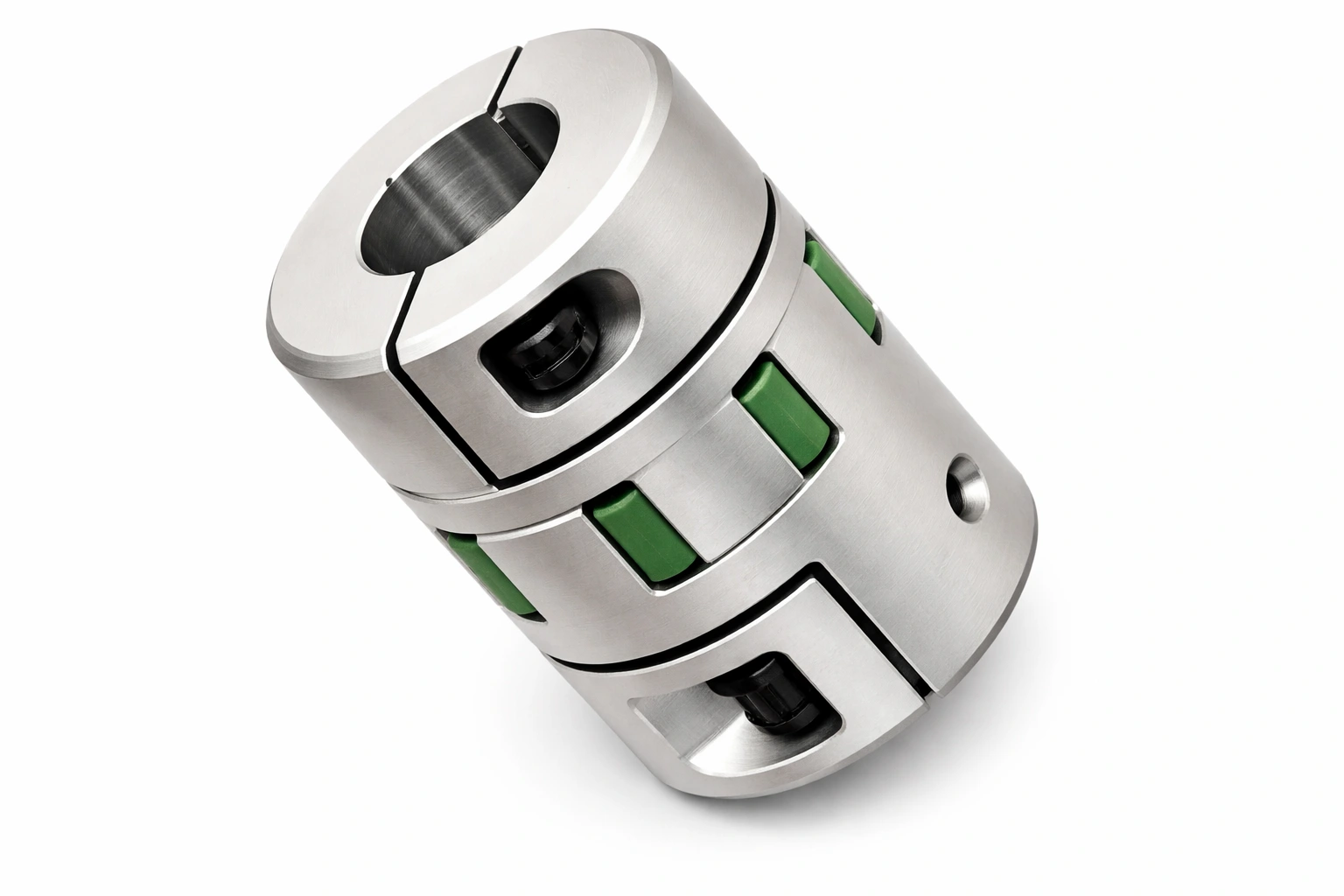
A jaw (spider) coupling uses two jaw hubs and an elastomer “spider” insert to transmit torque with high damping and moderate misalignment tolerance.
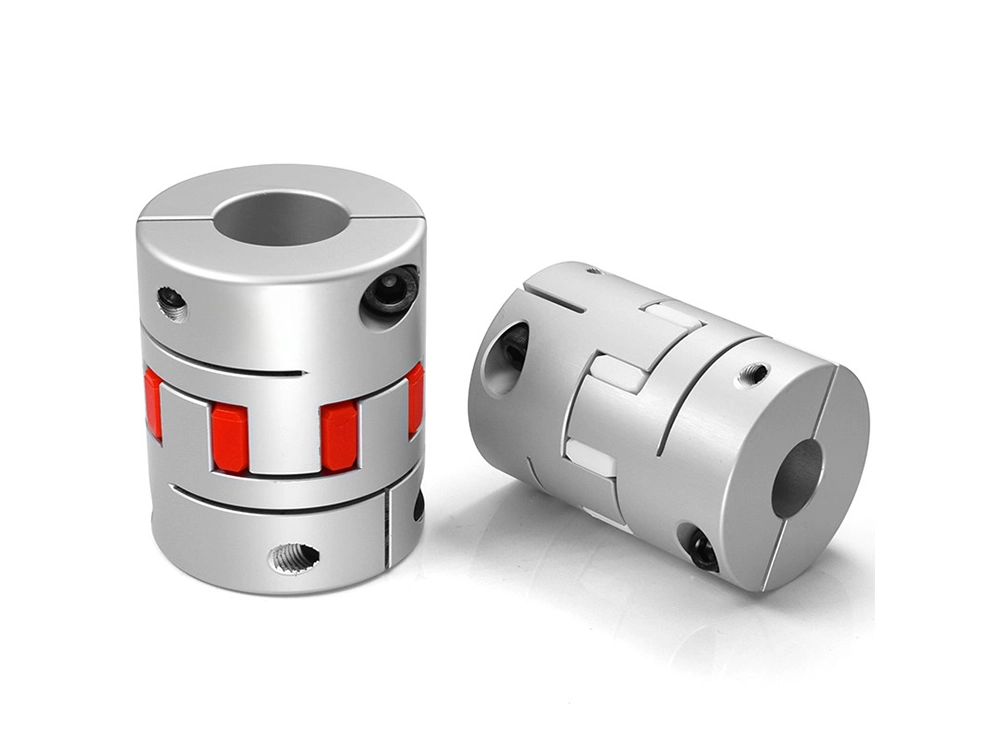
How it works (conceptual): Two metal hubs with jaws compress an elastomer spider; torque transfers through elastomer deformation (which also damps vibration).
Pros
High shock absorption and vibration damping
Handles angular + parallel misalignment (within rating)
Simple, cost-effective, easy insert replacement
Cons
Insert is a wear item (heat, oil, ozone affect life)
Not ideal for ultra-high precision torsional rigidity
Torque density lower than gear couplings at same size
Typical applications
Servo motors, general motor drives
Pumps, light-to-medium compressors
Chiheng CNC angle: custom aluminum/steel hubs + polyurethane spiders (hardness tuned to damping vs stiffness)
A disc coupling transmits torque through stainless disc packs for high torsional stiffness and high-speed precision, with limited damping.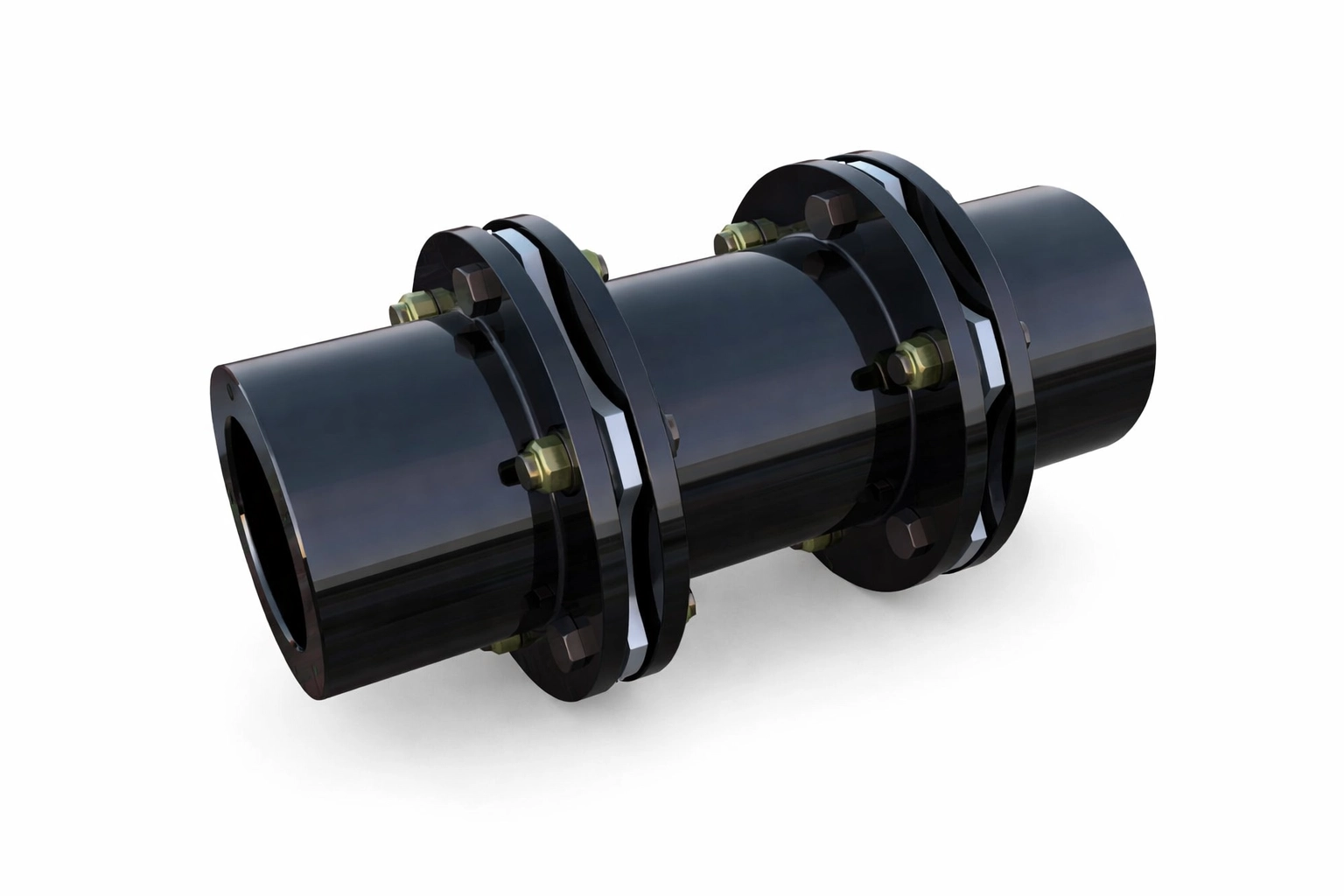
Structure: Laminated disc packs bolted between hubs; flex comes from disc bending.
Pros
High torsional stiffness (control accuracy)
Great for high speed and dynamic balance
No elastomer wear in clean setups
Cons
Low damping (can pass vibration)
Often limited axial float—verify spec for thermal growth
Bolted joints need correct torque/inspection
Typical applications
High-speed turbines
Precision machinery, test rigs
Note: Many disc designs are angular-focused and don’t like large axial movement.
A gear coupling uses internal/external gear teeth (usually lubricated) to deliver very high torque capacity with multi-axis misalignment capability.
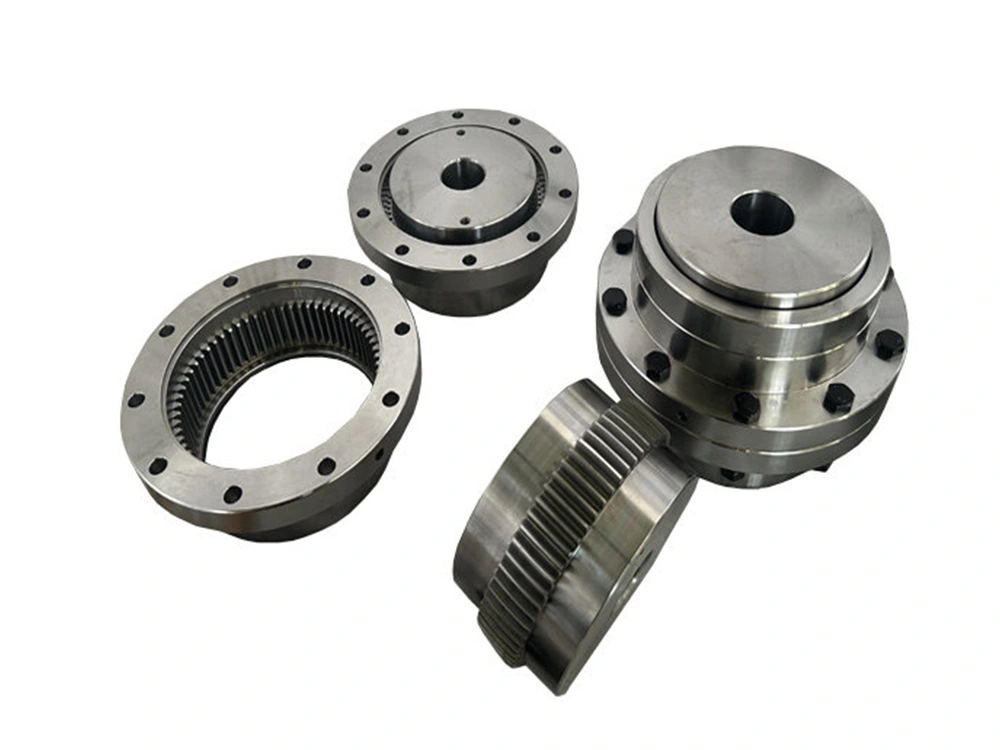
Principle: Crowned gear teeth and lubrication film allow misalignment while transmitting heavy torque.
Pros
High–very high torque density
Suitable for heavy duty cycles
Can accommodate multiple misalignment types (when maintained)
Cons
Needs lubrication + sealing (maintenance requirement)
Misalignment + poor lubrication accelerates tooth wear
Heavier/more complex than jaw/Oldham
Typical applications
Steel mills, heavy industry, crushers, mixers
High torque flexible shaft coupling use cases
A grid coupling uses a spring-steel grid element to transmit torque while providing excellent shock-load damping for industrial drives.
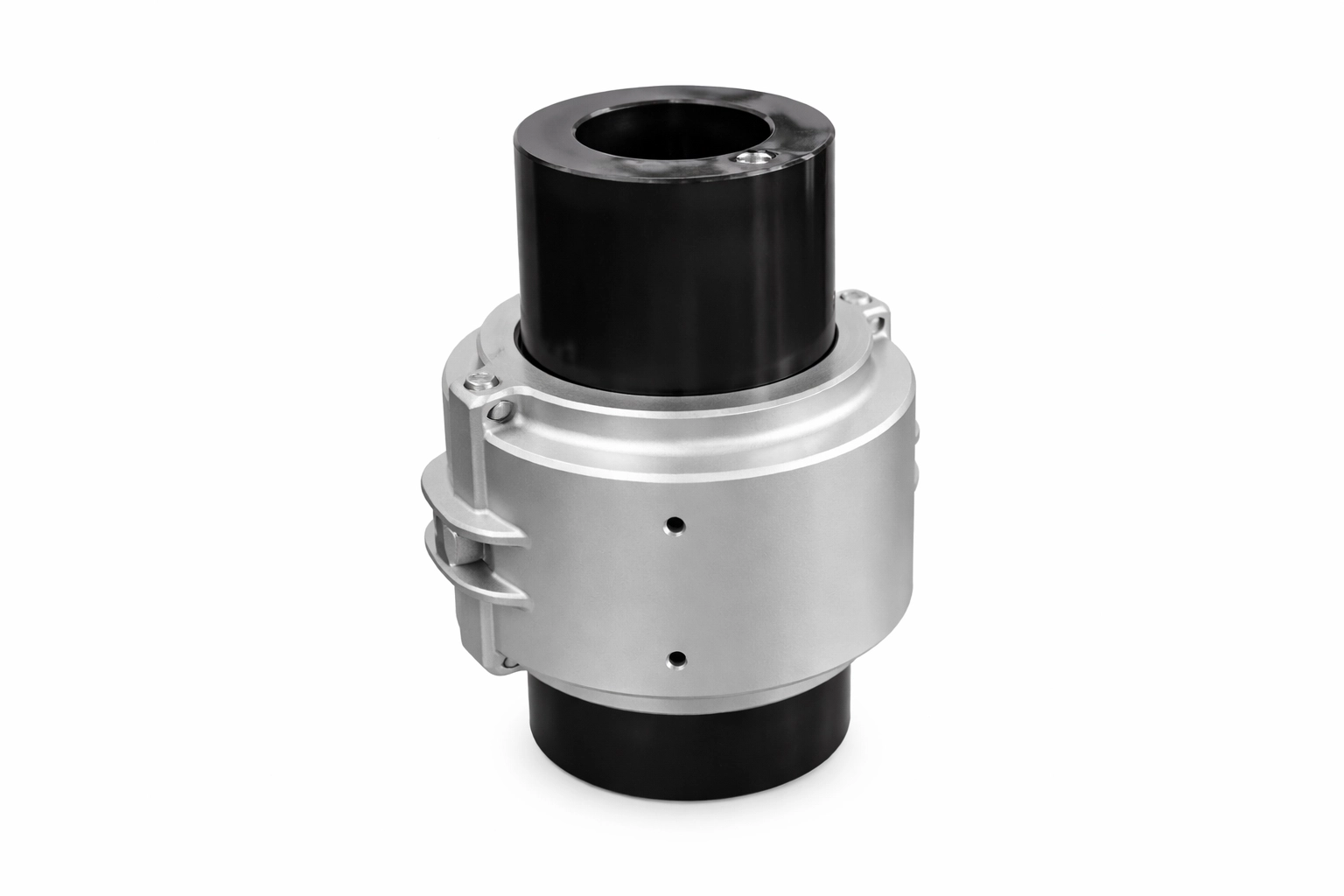
Structure: Serpentine grid sits in hub grooves and flexes under load changes.
Pros
Excellent for shock loads and vibration damping
Medium–high torque capability
Rugged for plant environments
Cons
Often uses lubrication; periodic inspection helps reliability
Grid element can wear over time
Not as torsionally stiff as disc couplings
Typical applications
Fans, conveyors, compressors
Material handling systems with starts/stops
An elastomeric coupling uses rubber/urethane elements (tire/sleeve styles) to deliver very high damping and broad misalignment tolerance for general drives.
Common element types
Tire type: rubber tire bolted between flanges
Sleeve type: elastomer sleeve connects hubs
Pros
Very high damping (noise/vibration control)
Handles angular/parallel/axial misalignment (within rating)
Helps protect bearings/seals from shock and resonance
Cons
Elastomer ages (temperature, oil/chemicals, ozone)
Lower torque density than gear/grid
Element replacement is normal maintenance
Typical applications
Flexible couplings for motors
General industrial drives, conveyors, fans
An Oldham coupling is a three-piece coupling designed for high parallel offset misalignment using a floating center disc.
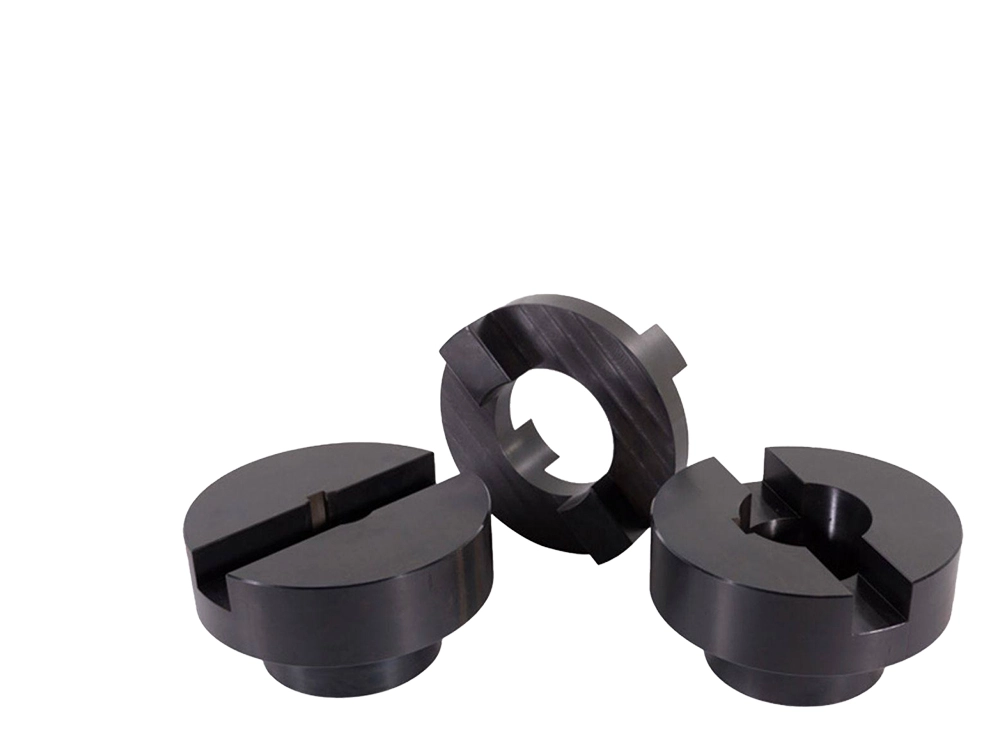
Structure: Two slotted hubs + a sliding floating disc.
Pros
Excellent parallel offset capability
Can provide electrical isolation (disc material dependent)
Compact and cost-effective for light duty
Cons
Low torque capacity
Center disc wears (sliding friction)
Not ideal for high shock loads
Typical applications
Encoders
Light-duty motion control
A beam (helical) coupling is a single-piece slotted metal coupling that provides zero-backlash potential for small motion systems with low damping.
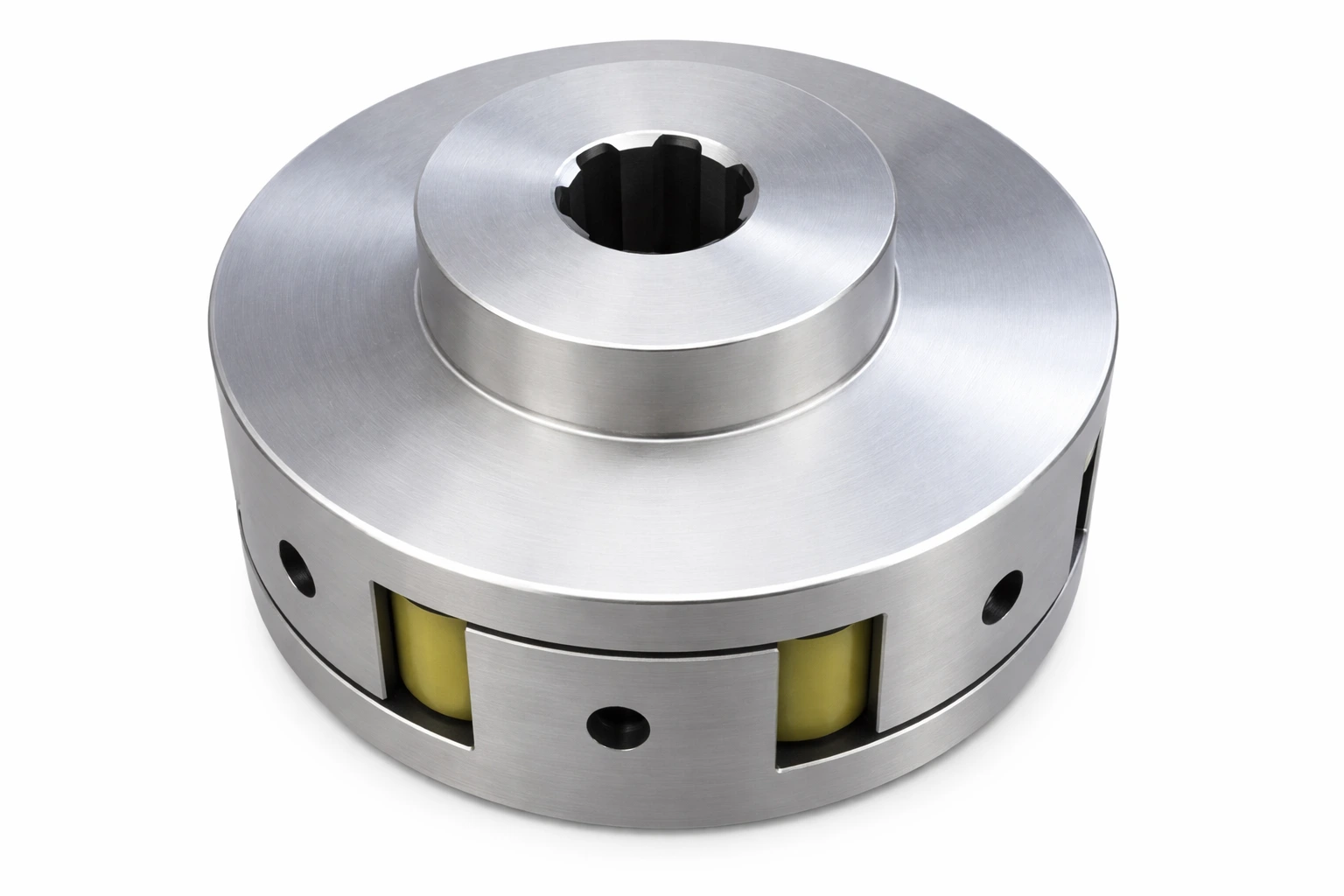
Structure: One-piece aluminum/stainless with helical cuts.
Pros
Compact, zero-backlash options
Good for precision positioning
No elastomer insert to replace
Cons
Low damping
Low torque compared with gear/grid
Excess misalignment can cause fatigue cracking
Typical applications
Stepper motors
CNC axis drives, small robots