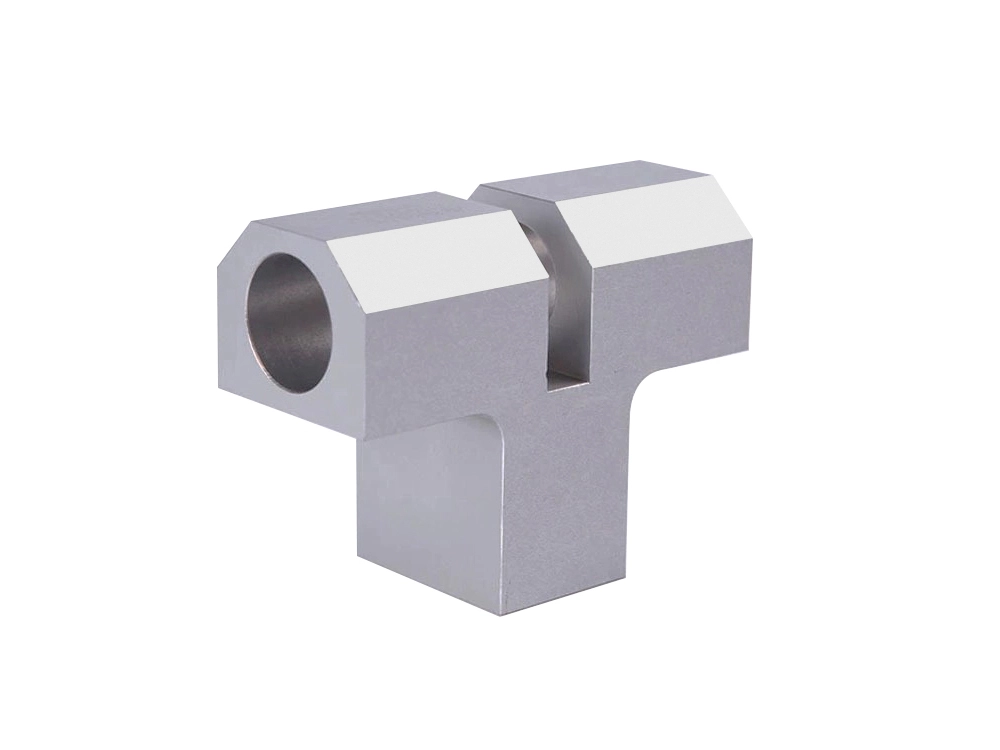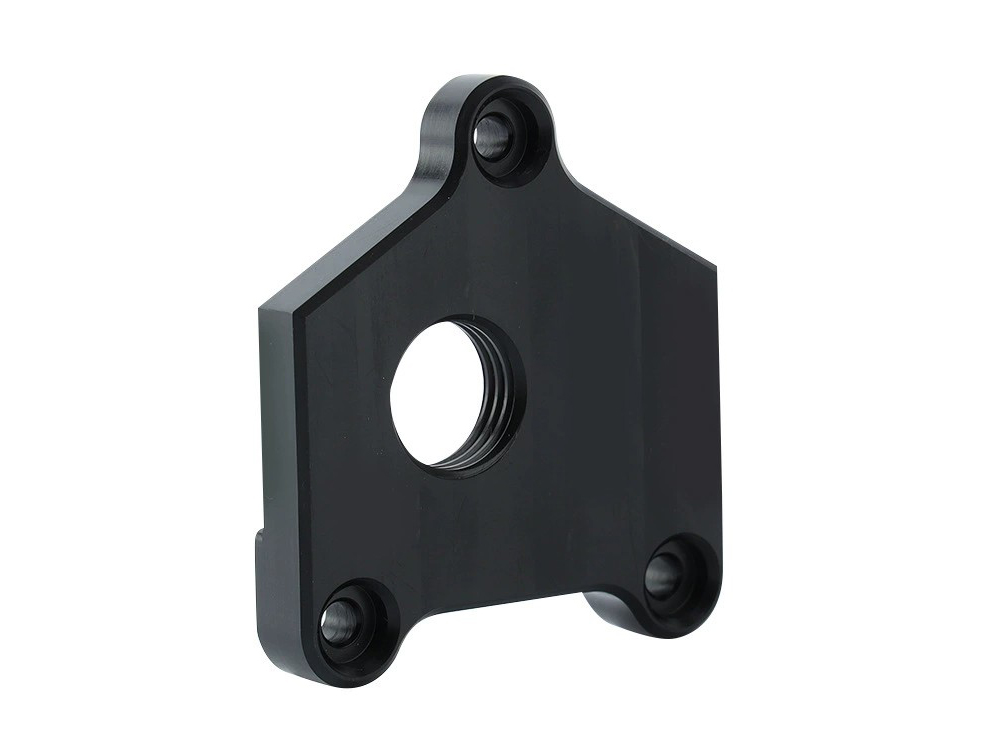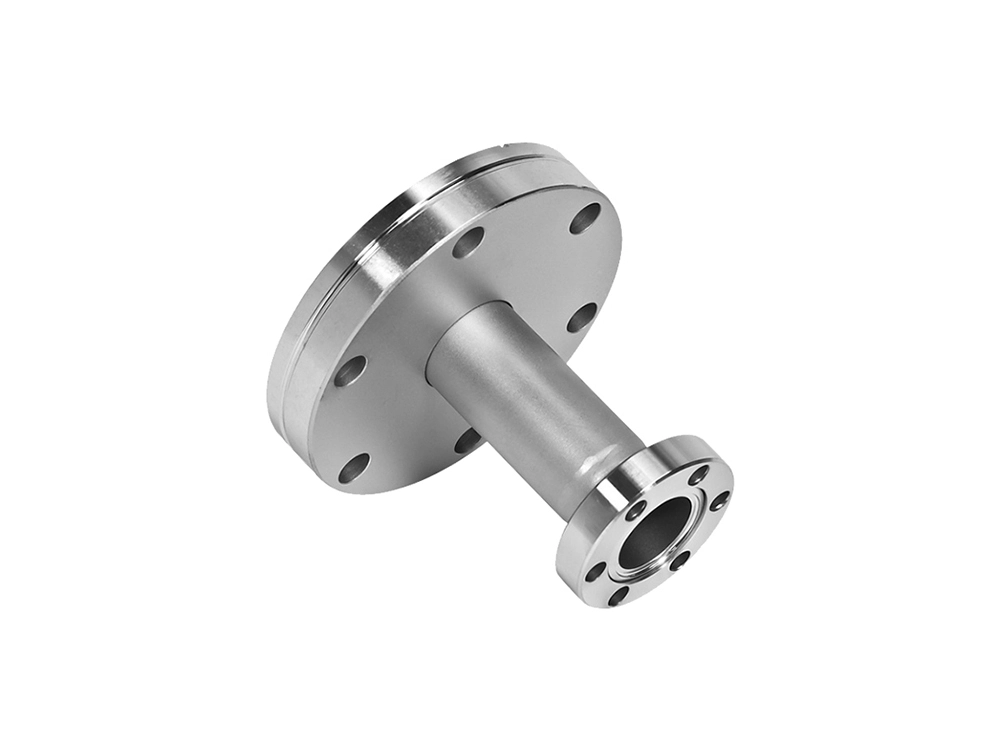

Chihenghardware provides controlled hot and mid-temperature black oxide coating for CNC-machined carbon steel, alloy steel, and selected stainless steel grades. Our black oxide finishing service produces a black, low-glare surface with virtually no dimensional change — making it well suited for fasteners, precision tooling, automotive components, and close-tolerance assemblies.
Black oxide is a chemical conversion coating, not a deposited layer — it forms magnetite (Fe₃O₄) directly from the steel surface, which is why it adds virtually no measurable dimensional change to the part.
Hot black oxide, our standard process, is carried out in an alkaline oxidizing bath at approximately 141–152°C (285–305°F) for 5–60 minutes, depending on part geometry and material.
Mid-temperature black oxide is our alternative in-house process, run at roughly 93–99°C (200–210°F) — a lower-temperature option with comparable appearance, suited to certain materials and applications.
The process follows five stages: degreasing, derusting and activation, black oxide conversion in the bath, rinsing, and post-treatment. Post-treatment — oil, wax, or a specified sealer — is not optional. It’s the step that determines real-world corrosion resistance, and we select it based on your part’s end-use conditions.
Carbon and low-alloy steel are the most common substrates for black oxide finishing. Typical applications include fasteners, pins, dowels, gears, machine housings, and structural hardware.
Corrosion resistance depends on the substrate and post-treatment. For carbon and alloy steels, black oxide should be combined with an oil, wax, or specified sealer; salt-spray performance is quoted only for the exact material, process, and acceptance criterion — not as a blanket rating.
Black oxide on stainless steel requires a different process window than standard carbon-steel blackening. The passive chromium oxide layer on stainless steel makes the reaction harder to control and typically requires grade-specific pretreatment, activation, and a dedicated oxidizing process.
We evaluate alloy grade, heat-treatment condition, part geometry, cosmetic requirements, and corrosion-test criteria before selecting the appropriate process. For qualifying 300-series stainless steels (minimum approximately 17% Cr, 7% Ni), processing can be evaluated and arranged to MIL-DTL-13924 Class 4 requirements, which specify 96 hours of ASTM B117 5% salt-spray exposure with no corrosion before preservative application, upon request.
On stainless steel, black oxide is primarily selected for its black, low-glare appearance and minimal dimensional change — not as a standalone corrosion-resistant coating in the same sense as zinc plating or PVD. Final corrosion performance depends principally on the stainless grade, surface condition, and any specified post-treatment.
Typical applications include stainless steel fasteners, medical device components, decorative hardware, and optical instrument structural parts.
We confirm substrate grade, heat-treatment condition, hardness, tolerances, cosmetic requirements, masking areas, and target standard. For stainless steel, we first determine whether the grade is suitable for controlled black oxide processing.
Cutting oils, scale, rust, and contamination are removed; surfaces are verified oil- and rust-free before processing.
Cleaning and surface preparation before black oxide conversion.
Rinsing after black oxide conversion, prior to post-treatment.
Carbon and alloy steel are typically processed via hot alkaline oxidation (approximately 141–152°C, 5–60 minutes); qualifying stainless steel is processed via a dedicated controlled route.
Oil, wax, a chromium-free sealer, or a customer-specified preservative is applied based on end-use requirements.
Coverage, color uniformity, surface defects, and critical dimensions are checked. For qualifying 300-series stainless steel, ASTM B117 5% salt-spray testing per MIL-DTL-13924 Class 4 can be arranged on request.
Does black oxide rust?
Black oxide alone provides only limited corrosion protection. On its own, an unsealed black oxide layer offers minimal resistance to moisture and can begin showing corrosion within a short exposure time. For real-world protection, black oxide should be combined with an oil, wax, or specified sealer — performance depends on the exact post-treatment system used, not the black oxide layer alone.
Is black oxide the same as black plating?
No. Black oxide is a chemical conversion coating that forms directly from the base metal, adding virtually no thickness or dimensional change. Black plating (black electroplating) is an electrolytic deposition process that builds up a separate coating layer, with different cost, wear behavior, and appearance characteristics. See our metal plating services for a closer comparison.
Can aluminum parts be black oxide finished?
Traditional black oxide is generally not suitable for aluminum parts. For a black, corrosion-resistant finish on aluminum, anodizing is the standard industry process and typically delivers better results. See our aluminum anodizing services.
Can you black oxide stainless steel?
Yes — selected stainless steel grades can be black oxidized using a process different from standard carbon-steel blackening. Suitability depends on alloy, heat-treatment condition, part geometry, cosmetic expectation, and corrosion-performance requirement. For qualifying 300-series stainless steels, we can evaluate processing to MIL-DTL-13924 Class 4 requirements.
Is black oxide on stainless steel a corrosion-resistant coating?
Not in the same sense as zinc plating, electroless nickel, or PVD-type barrier coatings. On stainless steel, black oxide is primarily selected for its black, low-glare appearance and minimal dimensional change. Corrosion performance depends principally on the stainless grade, surface condition, and any specified post-treatment.
How many hours of salt-spray resistance can black oxide provide?
There is no universal salt-spray rating that applies to all black oxide parts. For qualifying 300-series stainless steel, processing and testing to MIL-DTL-13924 Class 4 — which requires no corrosion after 96 hours in a 5% salt-spray test (ASTM B117) before preservative application — can be evaluated and arranged on request. For carbon and alloy steels, resistance depends strongly on the specified oil, wax, or sealer and should be validated for the exact part and acceptance criteria.
Does black oxide change part dimensions?
No appreciable dimensional change. Black oxide is a chemical conversion coating rather than a deposited layer, which is why it’s well suited to close-tolerance CNC components, threads, sliding interfaces, and precision assemblies.
No. Hot black oxide on steel forms a true magnetite (Fe₃O₄) conversion layer, while room-temperature (cold) blackening typically relies on different chemistry — often copper-based selenium or tellurium compounds. Cold blackening can suit lower-temperature, decorative, or touch-up needs, but shouldn't be treated as equivalent to hot black oxide in appearance, wear resistance, or corrosion performance.
Our primary capability is aluminum extrusion. For other metals, we offer CNC machining, die casting, and sheet metal fabrication. Contact us to discuss your full bill of materials.
You can send us any questions to get any information you would like to know, and we will respond to you in extremely short time.