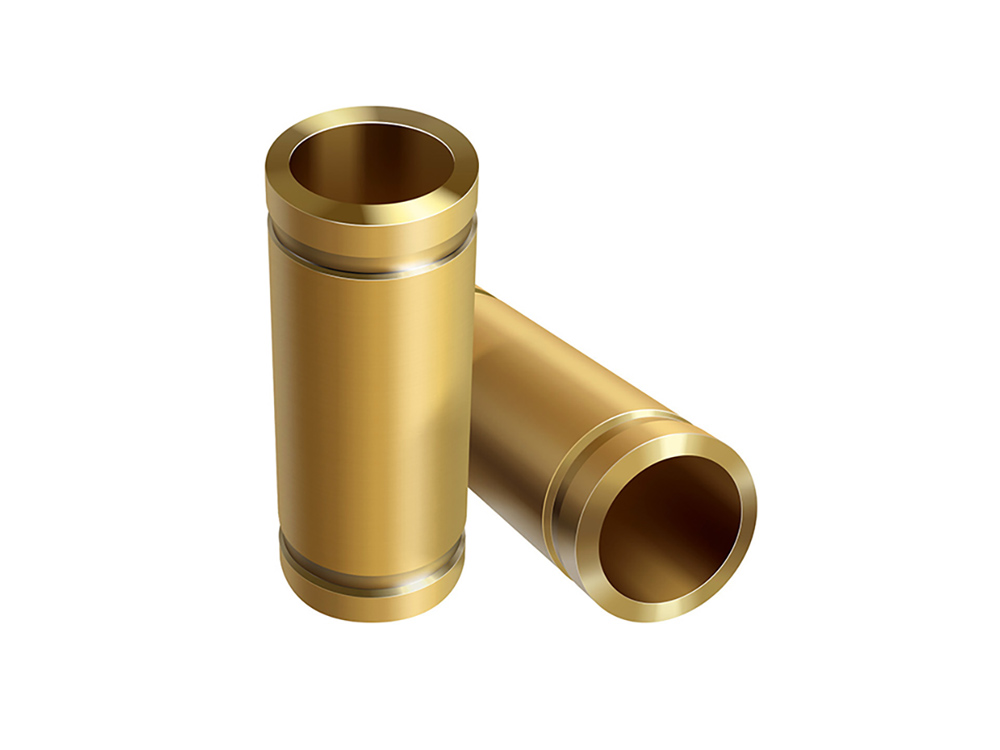

Choosing the right metal for a precision component often comes down to a handful of engineering questions: How hard is it? How heavy is it? Will it conduct electricity or heat efficiently enough? This guide breaks down copper's core mechanical and physical properties, compares it against brass, aluminum, and steel, and shows where each material makes the most engineering sense.
| Property | Copper (C11000) | Brass (C36000) | Aluminum (6061-T6) | Steel (1045) |
|---|---|---|---|---|
| Hardness (Brinell, HB) | 50 – 85 | 70 – 80 | 95 | 163 – 200 |
| Density (g/cm³) | 8.89 | 8.50 | 2.70 | 7.85 |
| Electrical Conductivity (%IACS) | 100% | 28% | 40% – 43% | 8% – 10% |
| Thermal Conductivity (W/m·K) | 388 | 115 | 167 | 50 |
| Typical Applications | Electrical connectors, heat sinks | Fittings, valve bodies, gears | Structural parts, housings | High-strength structural components |
Data based on standard alloy reference values for C11000 (ETP copper), C36000 (free-cutting brass), 6061-T6 aluminum, and 1045 carbon steel.
Pure copper (C11000) serves as the 100% IACS benchmark for electrical conductivity — every other material in this table is measured relative to it. Brass (C36000) contains added lead to improve machinability, which comes at the cost of significantly lower conductivity and thermal performance compared to pure copper. Aluminum 6061-T6 offers a hardness close to brass but at roughly one-third the density of steel, making it the default choice for lightweight structural parts. Steel 1045, meanwhile, delivers the highest hardness and strength of the four but trails far behind in both electrical and thermal conductivity.
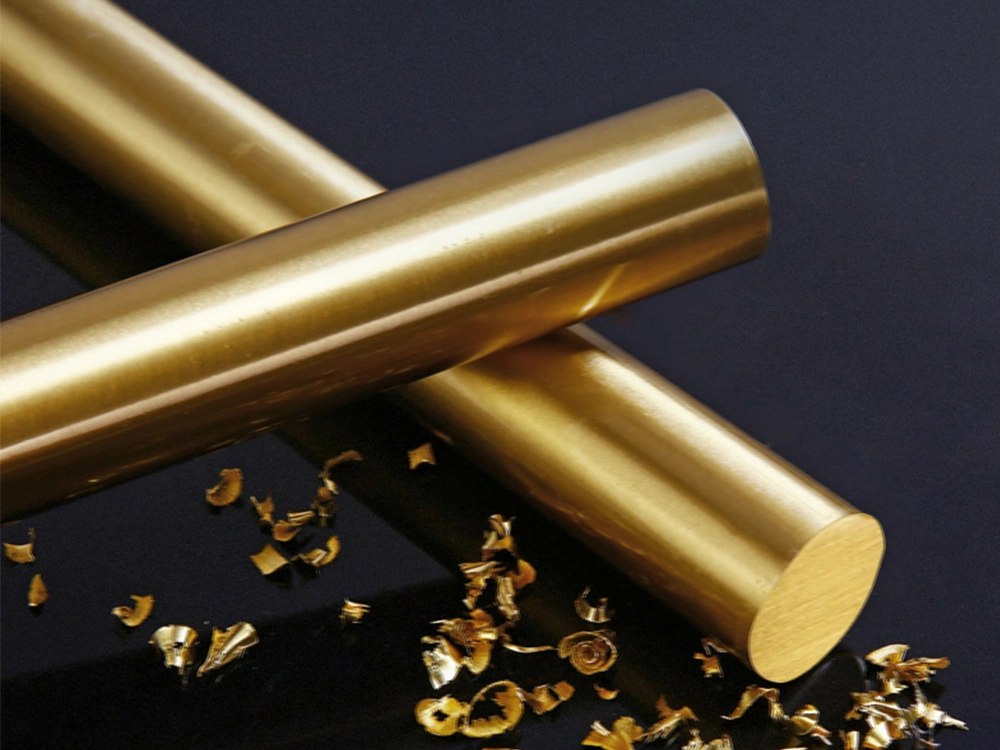
The challenge: Components like busbars, connectors, and terminal blocks need to carry current with minimal resistance loss. In these applications, conductivity is the priority — engineers can often accept a softer, less wear-resistant material because the part isn’t under heavy mechanical load.
The approach: Oxygen-free copper (C10100/C10200) or high-conductivity copper alloys are typically specified.For applications like busbar and connector manufacturing, switching from a copper-alloy substitute to OFC (oxygen-free copper) improved conductivity by roughly 250%, while keeping machining costs manageable through optimized tool paths for copper’s gummier cutting behavior.
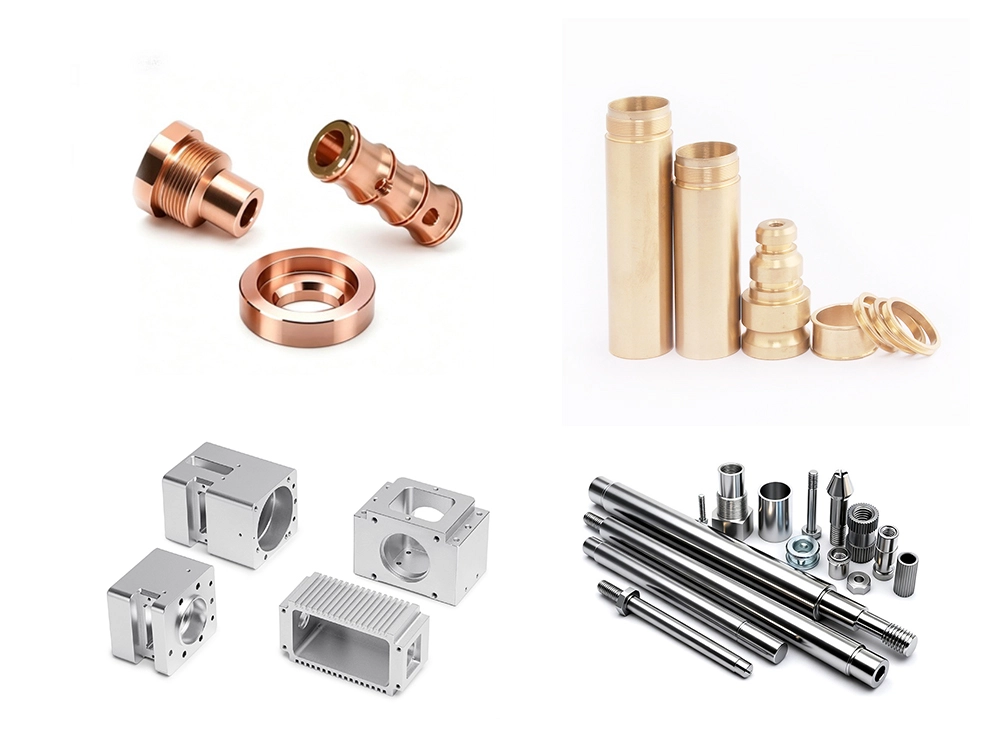
The challenge: Heat sinks, cold plates, and thermal management parts need to move heat away from a source quickly. Here, copper’s high thermal conductivity outweighs its comparatively lower strength — but designers still need enough structural integrity to survive assembly and handling.
The approach: Copper alloys with slightly higher hardness (e.g., C14500 tellurium copper) are often used to balance machinability and thermal performance. Fin geometries and wall thicknesses are adjusted during CNC programming to compensate for copper’s lower stiffness compared to aluminum.
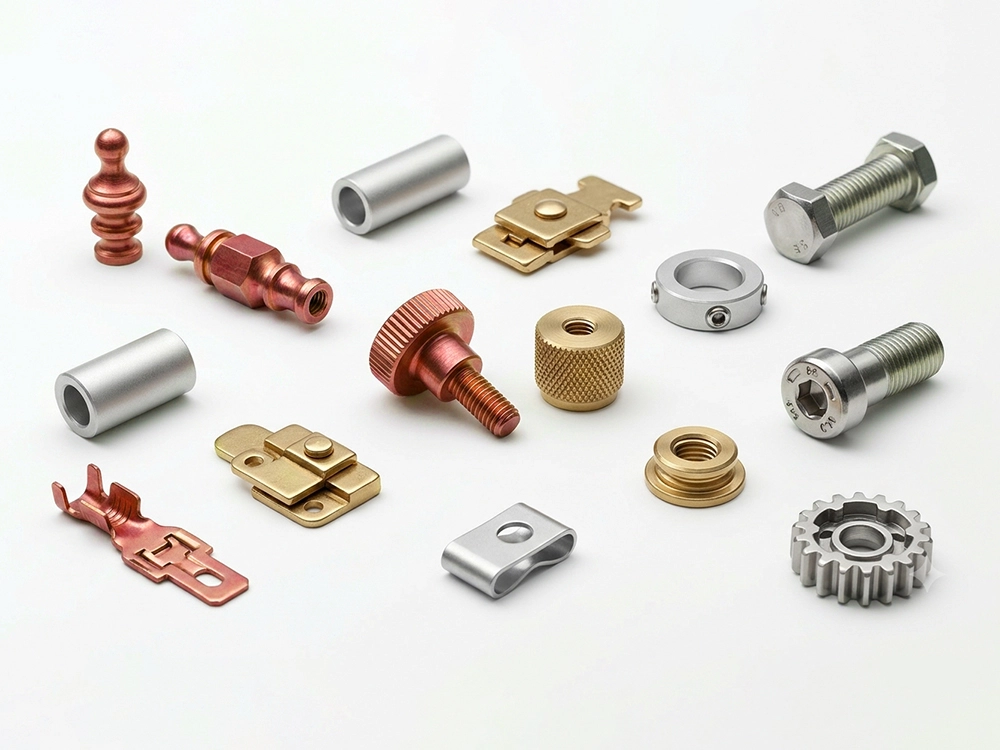
The challenge: Some components — counterweights, precision connectors, small electrical contacts — actually benefit from copper’s higher density relative to aluminum. When a part needs mass within a small footprint (e.g., balancing weights or high-density electrical contacts), density becomes an advantage rather than a drawback.
The approach: Copper or copper-alloy stock is selected specifically for its mass-to-volume ratio, with tight tolerance machining to keep weight distribution consistent across production batches.
Material selection depends on more than a single property — tolerance requirements, production volume, and finishing needs all factor in. Our engineering team can help you match the right copper alloy (or alternative) to your application.
Explore Our Copper CNC Machining Services →
For a side-by-side look at copper vs. brass specifically, see our detailed comparison: Brass vs. Copper: Full Material Guide →
Is Copper a Soft Metal?
Yes, pure copper is relatively soft compared to steel or brass, with a Brinell hardness of roughly 50–85 HB — well below aluminum (95 HB) and steel 1045 (163–200 HB). It’s softer than most engineering alloys but still durable enough for structural connectors, electrical components, and thermal management parts where conductivity matters more than surface hardness.
Is Copper Heavier Than Steel?
Yes, copper is denser than steel — copper measures 8.89 g/cm³ compared to steel 1045’s 7.85 g/cm³, roughly 13% heavier by volume. This means a copper part will weigh more than an identically sized steel part, which matters for applications where weight is a design constraint.
Is Brass Harder Than Aluminum?
No — in this comparison, brass (C36000) at 70–80 HB is actually slightly softer than aluminum 6061-T6 at 95 HB. This is a common misconception since brass often feels denser and more substantial. In practice, aluminum’s T6 heat-treated state gives it comparable or greater hardness than free-cutting brass, while brass still offers better machinability due to its lead content.
Is Brass Harder Than Copper?
Yes, brass is harder than pure copper. Brass (C36000) measures 70–80 HB versus copper’s 50–85 HB range — though copper’s upper hardness range can overlap with brass depending on temper and cold working. Generally, brass’s zinc and lead content increases hardness and improves machinability, while pure copper remains softer and more ductile, better suited to applications prioritizing conductivity over wear resistance.
Is Brass Stronger Than Steel?
No, steel 1045 significantly outperforms brass in hardness (163–200 HB vs. brass’s 70–80 HB) and correspondingly in strength. Brass offers a good balance of machinability, corrosion resistance, and moderate strength, but for high-load structural applications, steel remains the stronger choice.
Is Brass or Aluminum Softer?
Brass is slightly softer. Brass (C36000) measures 70–80 HB, while aluminum 6061-T6 measures 95 HB. This may be counterintuitive since aluminum is often associated with “lightweight and soft” — but in the T6 heat-treated condition, aluminum actually achieves greater surface hardness than free-cutting brass.
Is Brass Heavier Than Copper?
No, brass is lighter than pure copper. Brass density is 8.50 g/cm³ compared to copper’s 8.89 g/cm³ — the zinc (and lead) content in brass brings the overall density down slightly compared to pure copper.
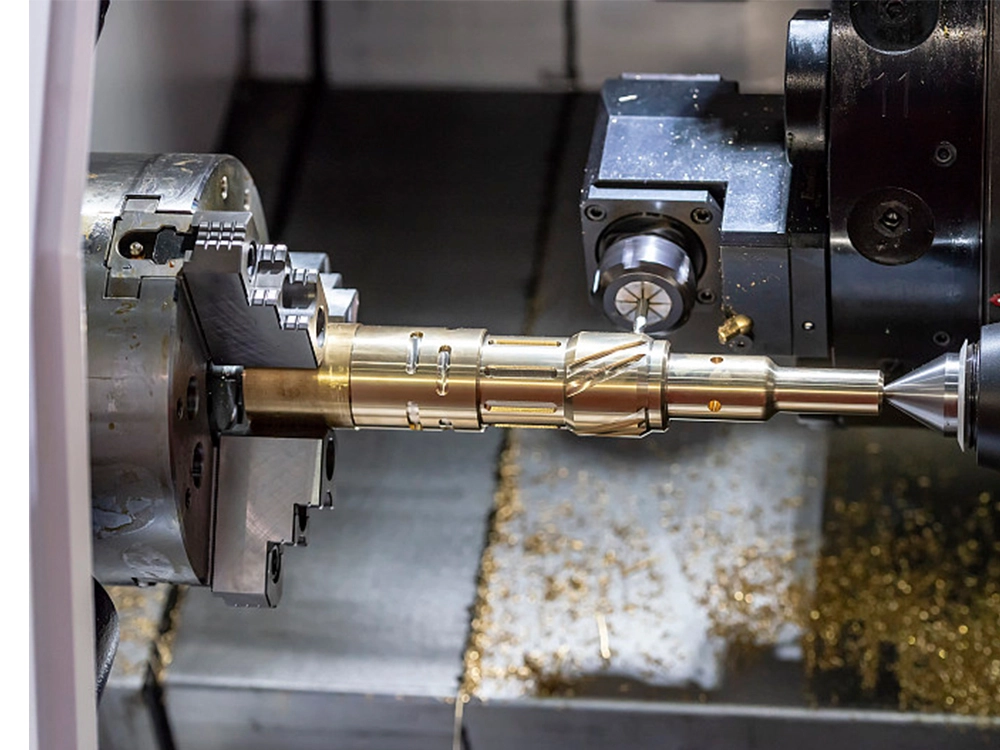
Engineering Reference
Engineering guide comparing copper's hardness, density, and conductivity against brass, aluminum, and steel.
Read more →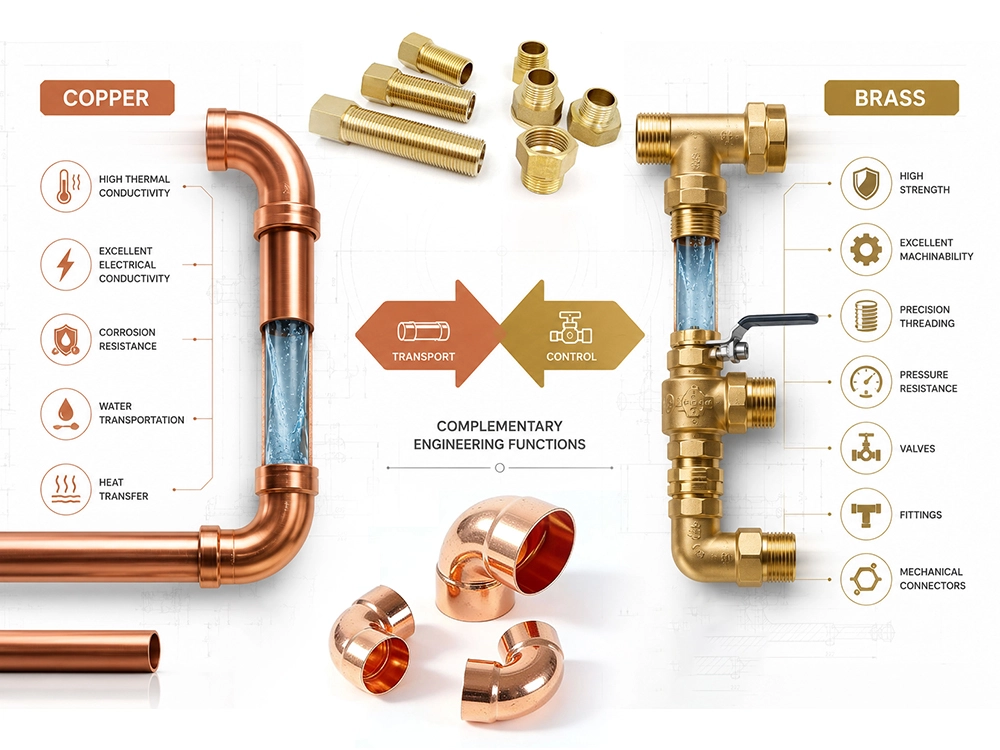
Application Guide
Real-world guidance on choosing between brass and copper for pipes, fittings, and valve bodies.
Read more →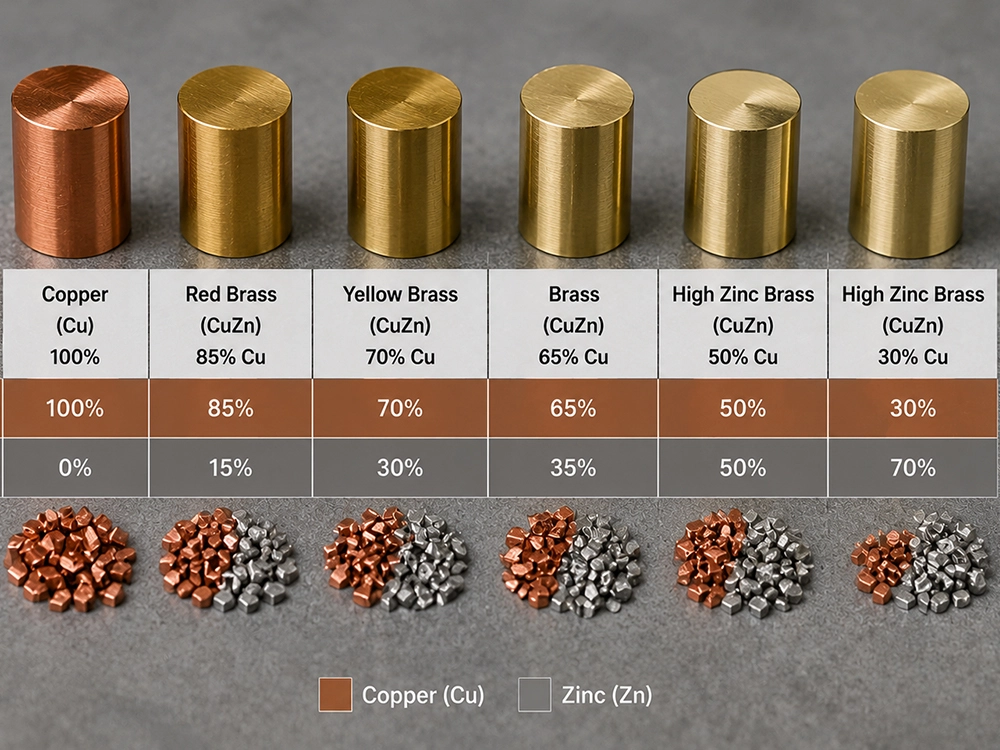
Material Basics
A breakdown of brass's copper-zinc composition and how alloy grade affects machinability and performance.
Read more →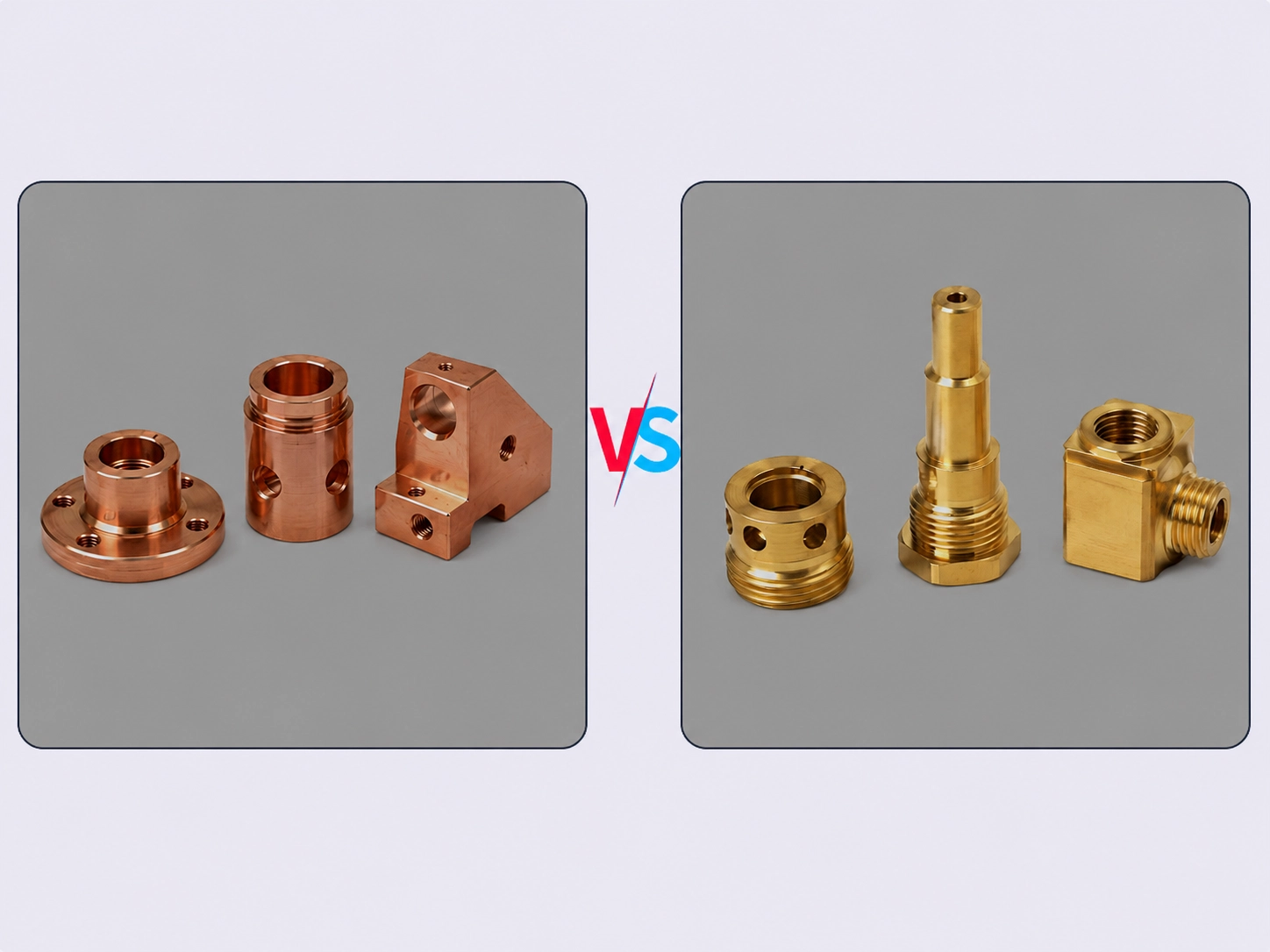
Material Guide
A side-by-side comparison of brass and copper covering cost, strength, machinability, and best-fit applications.
Read more →Stop thinking more, fill out the blank below, and send us an inquiry, and you will have a professional team of board game custom products contact you to answer any questions and provide pricing.
You can send us any questions to get any information you would like to know, and we will respond to you in extremely short time.