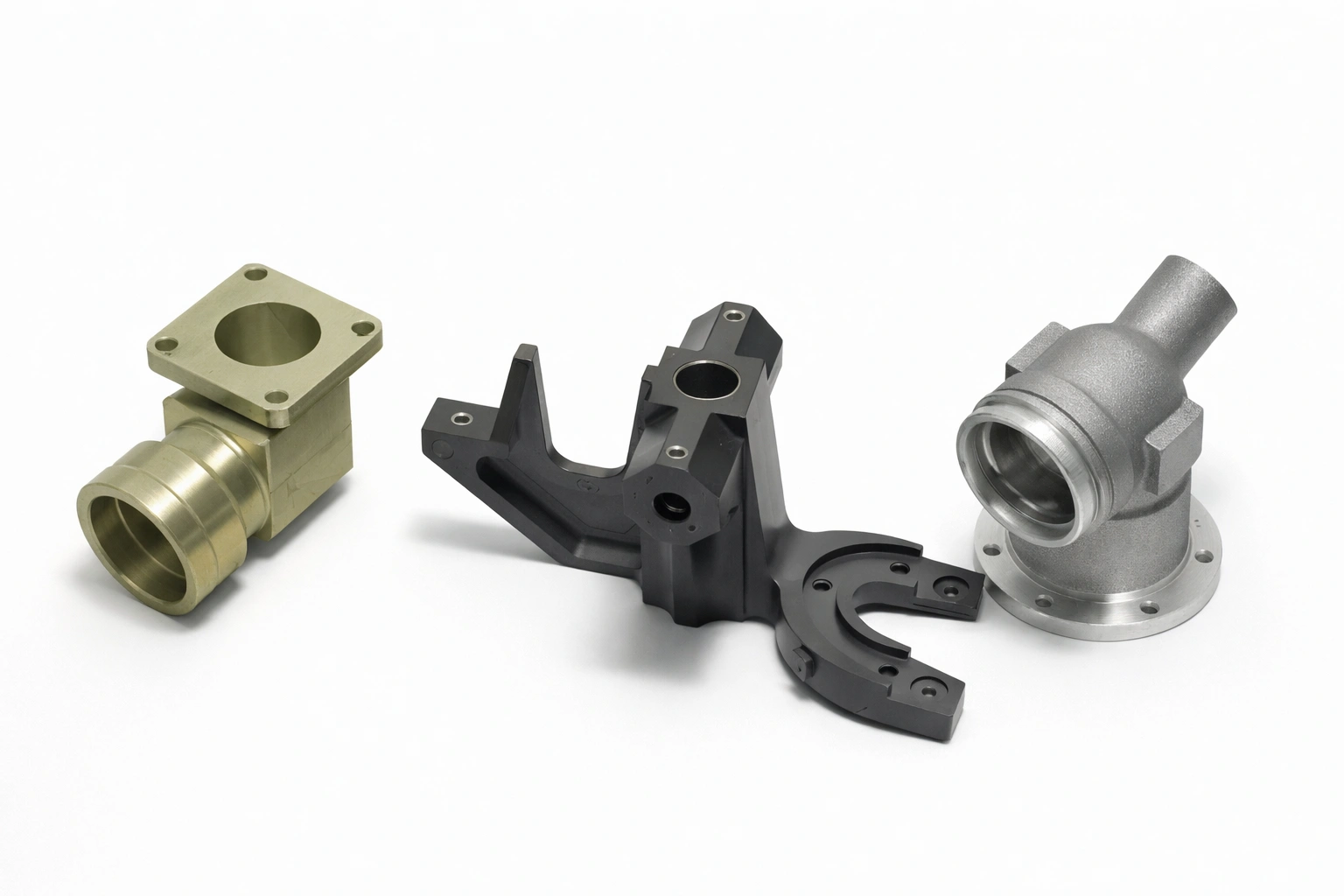

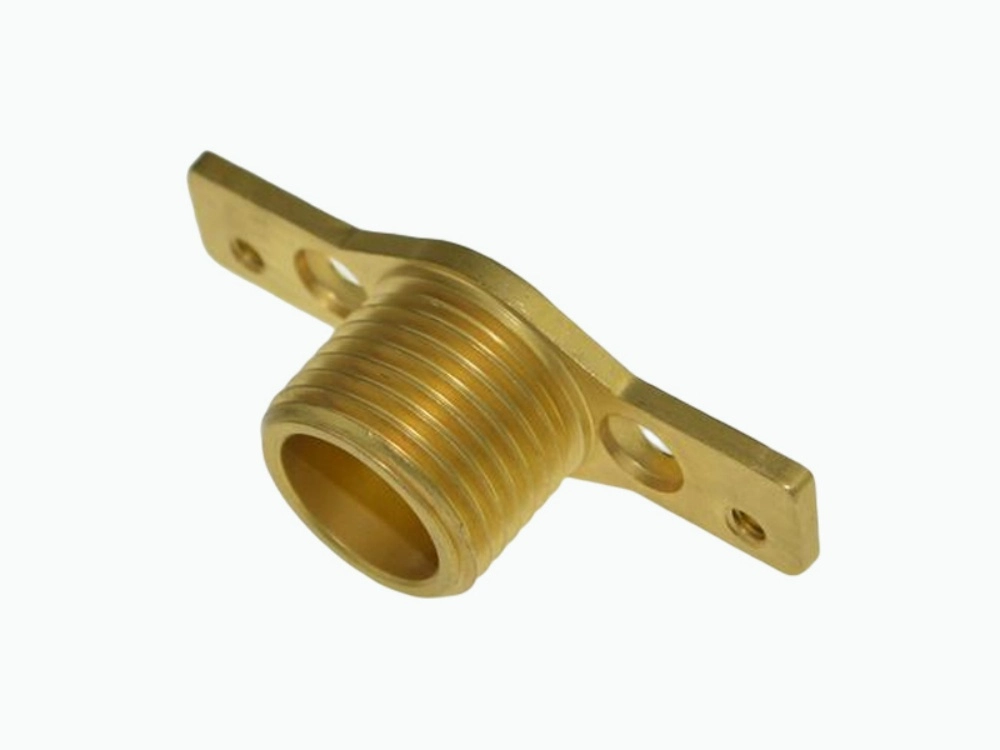
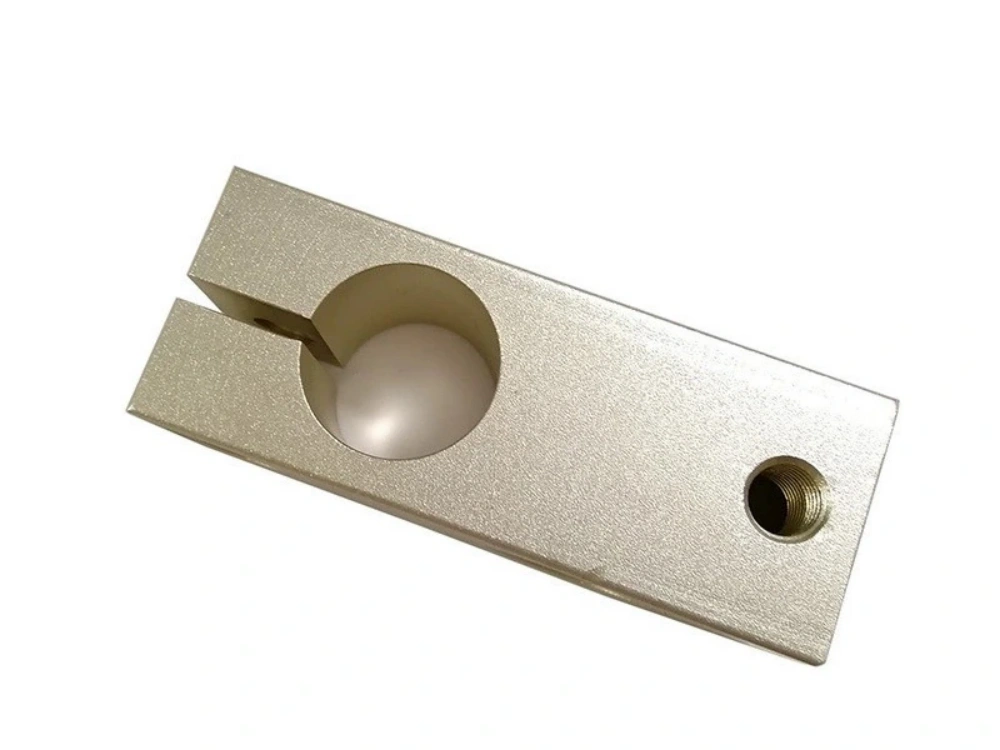
Copper CNC machining is a subtractive manufacturing process in which CNC milling machines, lathes, and multi-axis machining centers remove material from copper bar stock or billets to produce precision components to exact dimensional tolerances.
Copper is one of the most electrically and thermally conductive metals available for machining — with an electrical conductivity of approximately 58 MS/m and a thermal conductivity of 385–400 W/(m·K). These properties make it the material of choice for busbars, heat sinks, electrical contacts, waveguides, and RF shielding components where aluminum or brass simply cannot meet the performance specification.
However, copper’s softness and tendency to work-harden and stick to cutting tools make it more challenging to machine than aluminum. Chiheng’s engineers have refined our tooling strategies, cutting speeds, and chip management specifically for copper, delivering burr-free surfaces and held tolerances across production runs.
Manufacturing challenges
Copper is widely used in electrical, thermal, and precision applications because of its excellent conductivity and heat transfer performance. However, machining copper requires specialized manufacturing knowledge to achieve stable quality, tight tolerances, and consistent production results.
Chiheng Hardware provides reliable copper CNC machining solutions to help engineers and manufacturers overcome common production challenges.
Copper is softer and more ductile than many engineering metals, making dimensional control challenging during machining. Our CNC machining process uses optimized cutting parameters, precision tooling, and inspection procedures to maintain accurate dimensions for critical copper parts.
Our solution
Many copper components require complex geometries, thin walls, precision holes, or customized designs. Our engineering team supports custom copper machining from prototype development to production manufacturing.
Our solution
For electrical and industrial applications, inconsistent copper component quality can affect assembly performance and product reliability. Our quality control system ensures every production batch meets customer specifications.
Our solution
Capabilities
Select a capability to learn more about our processes and applications.
Chiheng Hardware provides precision CNC milling services for copper components with complex geometries, tight tolerances, and demanding functional requirements.
Our CNC milling process supports prototypes, low-volume production, and customized copper parts for electrical, thermal, and industrial applications.
Typical applications include:
Typical parts
Our CNC turning capabilities produce high-precision copper components with excellent dimensional accuracy and surface quality.
We manufacture cylindrical copper parts including shafts, terminals, bushings, and custom fittings according to customer drawings.
Typical applications include:
Typical parts
For complex copper components requiring multi-surface machining, our 5-axis CNC machining capability reduces setups and improves dimensional consistency.
This process is suitable for parts with:
Typical parts
From prototype validation to production manufacturing, Chiheng Hardware provides complete copper machining solutions.
We support:
Typical parts
Wire and sinker EDM for intricate internal geometries, blind cavities, and precision thread forms in soft copper where conventional tooling risks deformation or burring. Achieves complex 3D profiles impossible by milling.
Typical parts
In-house polishing, passivation, and blackening. Partner plating lines for nickel, tin, silver, and gold — all RoHS compliant. Plating thickness reports and adhesion test records available on request.
Available finishes
See our work
Shot on the factory floor — real parts, real process, no studio.
Tin Bronze Precision Machining
Custom Brass Parts Manufacturing
CNC Machining Pure Copper (C110)
CNC Machining Cupronickel (Nickel Silver)
| Capability | Specification |
|---|---|
| Machining Process | CNC Milling, CNC Turning, 3-Axis Machining, 5-Axis CNC Machining |
| Copper Materials | C101 Oxygen-Free Copper, C110 Electrolytic Copper, Brass, Bronze |
| Tolerance | Up to ±0.005mm precision machining capability |
| Surface Finish | Polishing, Plating, Brushing, Custom Surface Treatments |
| Production Volume | Prototype, Low Volume Production, Mass Production |
| Part Inspection | CMM Inspection, Dimensional Measurement, Material Verification |
| File Formats Supported | STEP, IGES, X_T, DWG, DXF, PDF Drawings |
| Quality Standard | ISO 9001 Quality Management System |
Machining note: C145 (Tellurium Copper) is our recommended grade when you need both good conductivity and fast, economical CNC turning. The tellurium addition dramatically improves machinability without meaningfully sacrificing electrical performance.
| Grade | Common Name | Key Properties | Typical Applications |
|---|---|---|---|
| C101 / C11000 | Electrolytic Tough Pitch (ETP) | 99.9% Cu, highest conductivity (~100% IACS) | Busbars, electrical contacts, motor windings |
| C110 | Oxygen-Free Copper (OFC) | 99.99% Cu, excellent for welding | Vacuum components, high-frequency connectors |
| C145 / C14500 | Tellurium Copper | Free-machining grade, 95% IACS | High-volume turned parts, electrical terminals |
| C172 | Beryllium Copper | High strength (1,100–1,400 MPa UTS), spring-hard | Precision springs, contacts, aerospace connectors |
| Red Copper (T2) | Pure Copper (Chinese grade) | Equivalent to C110, widely used in China supply chain | Heat exchangers, plumbing fittings, RF parts |
Copper CNC machined parts are widely used in industries that require excellent electrical conductivity, thermal performance, corrosion resistance, and precision manufacturing.
| Industry | Typical Copper Applications |
|---|---|
| Electronics | Copper connectors, terminals, conductive components, electrical contacts |
| Electrical Equipment | Busbars, copper electrodes, power components |
| Automotive | EV electrical components, battery connectors, precision copper parts |
| Medical Equipment | Precision conductive components and customized copper parts |
| Aerospace | Lightweight thermal management and electrical components |
| Industrial Equipment | Heat transfer parts, fittings, and custom mechanical components |
Explore our previous copper CNC machining projects to see how we support customers with precision copper components, complex geometries, and production requirements.
Copper is specified over aluminum and brass when one or more of the following is true:
Electrical conductivity is paramount. Pure copper (C101) delivers ~100% IACS conductivity — roughly 60% better than the best aluminum alloys and six to seven times better than common brass grades. For busbars, EV battery connectors, or switchgear contacts, there is no practical substitute.
Thermal management is critical. With thermal conductivity of 385–400 W/(m·K), copper removes heat from power electronics, laser diodes, and RF amplifiers more efficiently than any other commonly machinable metal. Copper cold plates and vapor chamber bases routinely outperform aluminum at equivalent wall thickness.
Corrosion resistance in plumbing and fluid systems. Copper has been used in plumbing fittings and valve bodies for over a century. It resists dezincification (unlike some brass alloys), does not leach harmful compounds into potable water, and maintains dimensional stability across wide temperature ranges.
Electromagnetic shielding. Copper’s combination of electrical conductivity and magnetic permeability makes it the preferred material for RF shielding enclosures, waveguides, and Faraday cages in telecommunications and defense electronics.
If you are comparing copper and brass for your machined parts, the decision usually comes down to machinability versus conductivity:
Brass (a copper-zinc alloy) is significantly easier and faster to machine than pure copper — C360 free-machining brass cuts approximately 2–3× faster with lower tool wear. Brass also offers higher yield strength (typically 170–450 MPa vs. copper’s 70–300 MPa) and better corrosion resistance in many atmospheric environments.
However, brass conductivity sits at roughly 25–28% IACS for common alloys — far below copper’s 95–100% IACS. If your part must carry significant electrical current or transfer heat efficiently, brass will underperform.
As a general rule: choose brass for structural fittings, valves, and decorative hardware; choose copper for electrical contacts, busbars, heat sinks, and waveguides.
→ Read our full Brass vs. Copper guide for a detailed property comparison.
| Parameter | Standard Capability | Tight Tolerance |
|---|---|---|
| Dimensional tolerance | ±0.01mm | ±0.005mm |
| Surface roughness (as-machined) | Ra 1.6 µm | Ra 0.4 µm |
| Concentricity (turning) | 0.01mm | 0.005mm |
| Flatness (milled face) | 0.01mm / 100mm | 0.005mm / 100mm |
| Thread tolerance | 6H / 6g | 5H / 5g |
All copper parts are inspected using CMM (coordinate measuring machine), optical comparator, and surface profilometer. We provide a dimensional inspection report (First Article Inspection) with every new project by default.
Chiheng is ISO 9001:2015 certified with full material traceability — mill certificates available upon request.
Machine | Quantity | Brand | Max Part Size |
3-Axis CNC Machining Center | 50 | FANUC A-D14MIA | 1,500 × 800 mm |
4-Axis CNC Machining Center | 10 | — | 600 × 1,200 mm |
CNC Lathe | 35 | Tsugami | Ø300 × 1,200 mm |
EDM Machine | — | — | On request |
Quality assurance
At Chiheng Hardware, our copper CNC machining quality control system ensures every component meets customer specifications for dimensional accuracy, material performance, and production consistency.
From raw material verification to final inspection, every manufacturing stage follows strict quality management procedures.
Our quality management system follows ISO 9001 standards to ensure stable manufacturing processes and consistent product quality.
Quality control covers:
We use professional inspection equipment to verify copper component accuracy and performance.
Inspection equipment includes:
Before shipment, copper CNC parts are inspected according to customer drawings and specifications.
Inspection includes:
Our inspection process supports all stages of production from prototype to final delivery.
Our inspection process supports:
What is copper CNC machining?
Copper CNC machining is a precision manufacturing process that uses CNC milling and turning machines to produce custom copper components with accurate dimensions and complex geometries.
It is widely used for electrical, thermal, automotive, medical, and industrial applications because copper provides excellent electrical and thermal conductivity.
What copper materials can you CNC machine?
Chiheng Hardware supports multiple copper materials, including:
Material selection depends on application requirements such as conductivity, strength, machinability, and operating environment.
What tolerance can you achieve for CNC machined copper parts?
Our copper CNC machining capability supports tight tolerance requirements for precision components.
For critical dimensions, tolerances can reach ±0.005mm depending on part geometry, material condition, machining process, and inspection requirements.
Is copper harder to machine than aluminum?
Copper is softer than aluminum in hardness terms, but it is more challenging to machine cleanly due to its tendency to gall on cutting tools and produce long, stringy chips. We use specific tooling geometries and cutting parameters to manage this — the result is burr-free parts with excellent surface finish.
Why is copper difficult to machine?
Copper has excellent conductivity but is more challenging to machine than many metals because of its softness, ductility, and tendency to generate built-up edges during cutting.
Successful copper machining requires optimized tooling, cutting parameters, chip control, and professional CNC experience.
Can you machine small-diameter copper parts?
Yes. Our Tsugami Swiss-type CNC lathes handle copper parts down to Ø3mm diameter with length-to-diameter ratios up to 20:1.
Do you offer plating or surface finishing on copper parts?
Yes — tin plating, nickel plating, silver plating, and gold plating are available through our partner finishers. Polishing, passivation, and blackening are done in-house.
What is your lead time for copper machined parts?
Prototype quantities (1–10 pcs): 5–7 business days. Production batches (100+ pcs): 10–15 business days depending on complexity.
Can you provide material certificates?
Yes. Mill certificates for all copper materials are available upon request at no additional charge.
What industries use CNC machined copper parts?
Copper CNC machined components are commonly used in:
You can send us any questions to get any information you would like to know, and we will respond to you in extremely short time.